
Pool Remodeling in Phoenix, AZ
Pool remodeling in Phoenix, AZ is construction work, and it needs a contractor licensed for it. The Pool Shack resurfaces pools, replaces waterline tile and coping, repairs cool deck and converts diving pools to play pools under an Arizona KA-5 dual license. The same crew that does the remodel runs the 28-day start-up afterward, from our North Phoenix base.
KA-5 dual license
Service and construction
What’s included
Pool Resurfacing, Tile, Coping and Deck Work Under One License
Most remodel calls start with feet. The plaster feels like sandpaper, the kids come out of the pool with scraped toes, and the waterline has a white crust no brush will move. Or the cool deck has cracked and lifted, and it burns in July. Or a contractor took a deposit last spring and stopped answering the phone.
Every summer makes it worse. Phoenix sun and hard water eat plaster from both sides, so a rough surface gets rougher and a stain sets deeper. A remodel that keeps getting pushed to next year costs more next year. And a bad contractor leaves a drained pool cracking in the heat while the calls go unanswered.
Pool remodeling from The Pool Shack covers the whole shell and deck under one Arizona KA-5 dual license. Resurfacing in plaster, quartz or pebble. Waterline tile and coping replaced. Cool deck texture repaired or overlaid. Diving pools converted to play pools. You get a written contract with the license number on it and a drain scheduled for the cool months. The 28-day plaster start-up is run by the same crew that services pools every week. When the water comes back in, it comes back balanced.
Is it time?
Signs a Phoenix Pool Needs a Remodel, Not Another Acid Wash
An acid wash strips a layer off the plaster. It cannot put one back. When you see these, the surface is done and a wash only buys a season.
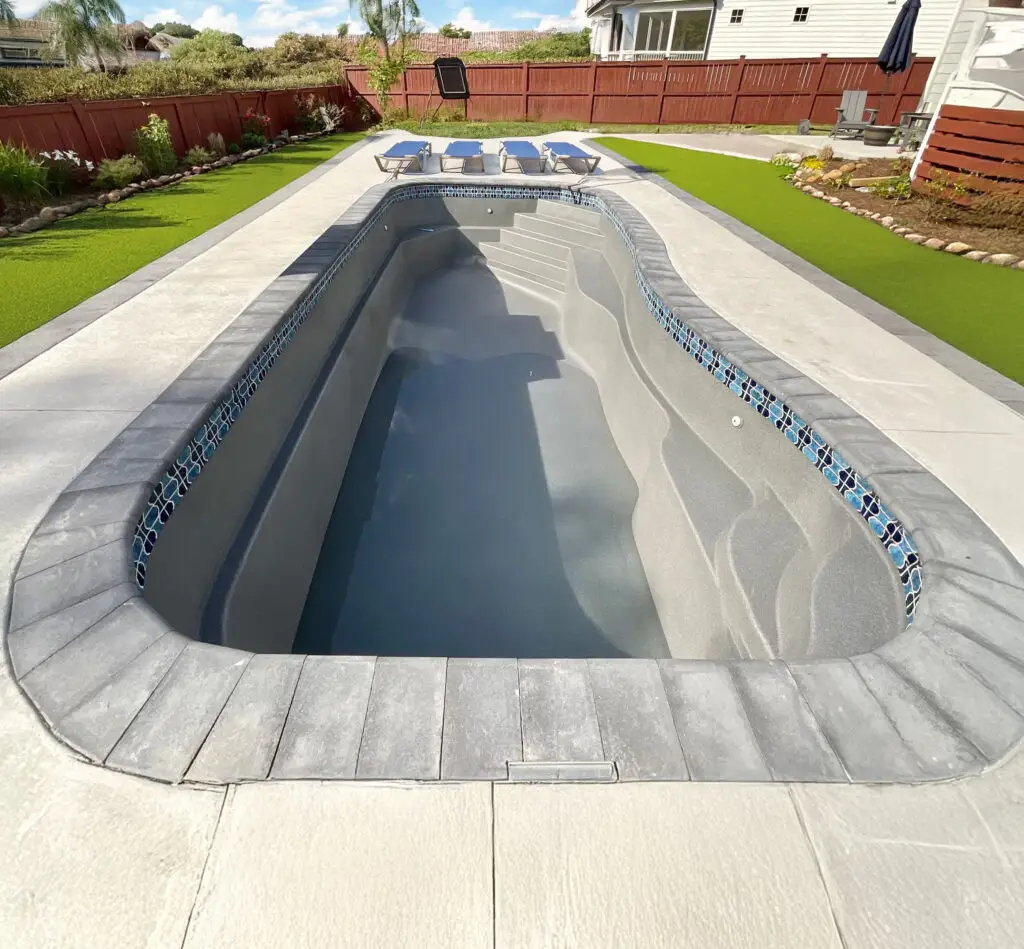
Plaster, pebble, tile
Coping and deck
Why it matters
What a Pool Remodel in Phoenix Has to Get Right
A remodel is the biggest check most pool owners ever write for the backyard. In Phoenix it also has the shortest margin for error, because the heat, the sun and the fill water all work against a new surface from the first day. A pool remodel in Phoenix, or a pool renovation if you prefer the word, either lasts fifteen years or five. These are the things that decide it.
Why pool plaster wears out faster in Phoenix than the brochure says
White plaster is a thin cement coat over the gunite shell. Two things attack it here. Corrosive water, with low calcium or low pH, dissolves it and leaves the surface etched and rough. Scaling water, which is what comes out of a Phoenix tap, deposits calcium on it and leaves the surface crusty and stained. Both happen in the same pool in the same year, because summer evaporation pulls the chemistry one way and monsoon fill water pulls it the other.
The result is a shorter life than the sales sheet promises. Plain plaster in Arizona conditions runs about five to eight years. Quartz finishes stretch that to ten or twelve. Pebble finishes run fifteen to twenty-five, because the aggregate takes the wear and the cement between it is a smaller target. Balanced water, held inside a saturation index of minus 0.3 to plus 0.3, is what pushes every one of those numbers toward the high end.
The signs a Phoenix pool needs resurfacing and not a third acid wash
Roughness is the first sign, and it is felt before it is seen. Etched plaster grabs skin, holds algae in its pores and stains faster every year. Gray patches mean the plaster has worn through to the gunite. Hollow spots that sound different when tapped are delamination, where the plaster has separated from the shell, and they will pop.
Calcium nodules, the small white bumps that grow on plaster, are a plaster problem, not a chemistry problem. They form where water is reaching the shell through a void and carrying calcium back out. An acid wash removes the bump and the layer of plaster around it, and the nodule returns. Two acid washes in five years is the point where the third one costs more than it saves. The surface is telling you it is done.
Pool resurfacing in Phoenix: plaster, quartz or pebble for hard water
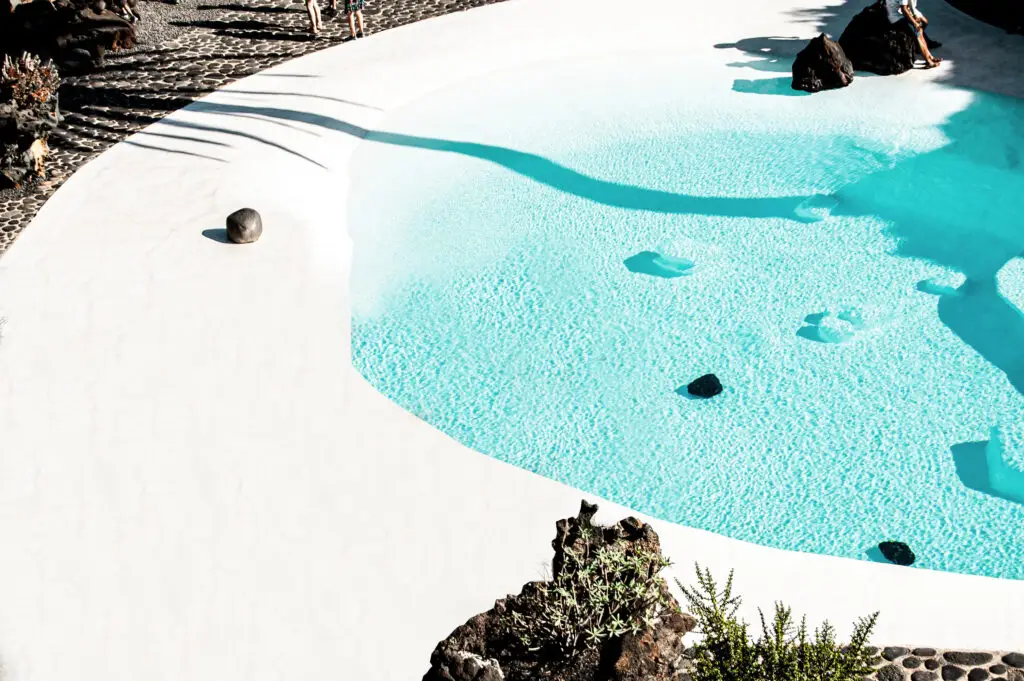
Plaster is the cheapest finish and the softest. It is smooth for the first few years and the most sensitive to water balance, which in Phoenix means it needs the most attention. Quartz adds crushed quartz to the plaster mix, which resists etching and holds color longer. Pebble finishes expose an aggregate of small stones in the cement, so the wear surface is stone, not cement.
In Phoenix the difference shows up at the waterline. Hard water leaves scale on every finish, but on plaster the scale bonds to a surface that is already softening. On pebble it sits on stone and comes off with a bead blast. For a pool that gets weekly service and balanced water, plaster is a fair choice. For a pool that gets heavy use or an owner who does not want to think about chemistry, pebble pays for itself in years.
Waterline tile, coping and deck: what a pool remodel in Phoenix includes beyond the surface
A surface alone is rarely the whole job. The waterline tile sits on the beam, and if the grout has failed or tiles are falling, it comes off before the plaster does. Coping is the cap on the beam; cracked or loose coping lets water behind the tile line and into the shell. Both get replaced with the pool drained, because that is the only time the beam is dry and reachable.
Then the deck. Cool deck is a textured acrylic coat over concrete. It cracks where the slab moves and burns where the texture has worn smooth. It can be recoated with new texture, or overlaid with travertine or pavers. The expansion joint between deck and coping gets recut and refilled with mastic, because a failed joint is the fastest way to crack a beam. Step edges get contrasting tile so the steps are visible from above the water, and glazed tile stays off the treads where feet land.
Diving pools are the last item. A deep end most families never use can be filled and reshaped into a play pool with a wider shallow area. It uses less water, heats faster and is easier to clean.
The 28-day plaster start-up that decides how long a new Phoenix pool surface lasts
New plaster hydrates for 28 days, and during that month it is at its softest and most likely to stain, scale or discolor. The start-up is a procedure, not a suggestion, and it is the part most remodel contractors hand back to the owner with a sheet of paper. The pool fills without stopping. Nothing goes in the water until it is full. Then the calcium hardness is brought to at least 150 ppm and the pH and alkalinity are set before anything else.
The pool is brushed twice a day, every day, to lift plaster dust off the surface. The filter runs for 72 hours straight. No chlorine goes in for 48 hours. The heater stays off until the dust is gone.
Chlorine is added on day three, salt not for 28 days, and calcium is raised slowly and never past 200 ppm during the cure. On day seven any remaining dust gets vacuumed out with a brush vacuum. Miss the brushing for three days in a Phoenix July and the streaks are permanent.
The Pool Shack runs that start-up with its own service crew. The crew that cleans pools every week already knows how to hold water balance through a heat wave. That is the practical advantage of a dual license. The construction side pours the surface, and the service side protects it.
Draining a Phoenix pool for a remodel: when it happens and where the water goes
Every pool remodel starts with an empty pool, and an empty pool in Phoenix is a liability. Exposed plaster crazes in summer heat within hours, and hydrostatic pressure from wet ground can lift a shell that has no water weight holding it down. So remodels are scheduled for October through April wherever the calendar allows. A summer remodel is possible, but the shell is kept wet and the fill starts the hour the surface is ready.
The water itself goes to the sewer cleanout nearest the house, which is what the City of Phoenix requires. Street drainage needs a permit, chlorine under 1 ppm and no salt water. A remodel also needs a hydrostatic relief valve checked or installed in the main drain, so ground water has somewhere to go while the pool sits empty.
Cool deck and pool deck repair in Phoenix: why decks crack and how they get fixed
A concrete deck in Phoenix moves. It expands in 115-degree afternoons and contracts on 40-degree winter nights, and the soil under it shifts with every monsoon. Decks are built with control joints to give cracks a place to happen and expansion joints to protect the slab. When those joints are missing or filled with dirt instead of mastic, the crack finds the beam instead.
Repair depends on what failed. Surface cracks in the texture coat get patched and the whole deck recoated in a lighter, cooler texture. Lifted sections get ground or cut out and re-poured. A deck that is sound but ugly gets a travertine or paver overlay. Coping that has moved with the deck gets reset or replaced, and the mastic joint between the two is cut fresh so the next expansion cycle has room.
Calcium and scale: what a pool remodel fixes and what comes back
A remodel resets the surface, not the water. The same hard fill water that scaled the old plaster will scale the new tile line within a couple of summers if the chemistry drifts. So the calcium question is really two questions. Heavy scale on the existing tile, coping and rockwork gets removed by bead blasting before the new surface goes in. That is handled through our tile cleaning service and it is part of most remodel quotes.
After the remodel, the fix is balance. Alkalinity of 80 to 120 ppm, calcium hardness of 200 to 400 ppm and pH near 7.5 keep the saturation index near zero. That is the only state in which water neither dissolves plaster nor deposits scale on it. Follow the remodel with weekly service and it is a fifteen-year surface. Follow it with nothing and it is a five-year one.
What a pool remodel costs in Phoenix and how to keep the contract honest
A pool remodel in Phoenix in 2026 runs roughly $6,500 to $9,000 for a plaster resurface and $10,000 to $14,000 for pebble. Waterline tile adds $3,000 to $5,000, and a full remodel with tile, coping and equipment runs $35,000 to $50,000. A resurface takes one to two weeks from drain to start-up. A full remodel takes two to four. Those are market ranges, not our quote. Every pool is measured and quoted in writing after a walk-through.
The Arizona Registrar of Contractors gives plain advice for a job this size. Get the contract in writing with the license number on it, a full scope, the price and a completion date. Do not let payments run ahead of the work. Check that the license class covers construction, which a KA-5 dual license does. A licensed contractor also puts you under the Residential Contractors’ Recovery Fund, which pays up to $30,000 if something goes wrong. An unlicensed one leaves you with nothing.
Why one licensed crew for the Phoenix pool remodel and the service after it
Most remodel companies in the Valley build and leave. Most service companies cannot legally touch the shell. The Pool Shack holds both sides of the license, which changes how the job runs. Leaks found during the drain get fixed while the pool is empty, by the same crew, instead of becoming a second contractor’s problem.
Equipment that is at the end of its life gets replaced while the plumbing is open. And the start-up, the 28 days that decide the life of the surface, is done by people who balance water for a living.
After that, the same crew can stay on as the weekly service, so the surface is protected by the people who installed it. For underwater problems that turn up later, a stuck light or a cracked drain cover, our scuba-capable techs fix them without draining the pool you just paid to fill.
Getting started
How a Pool Remodel Starts
1
We walk the pool with you
Surface, tile, coping, deck, plumbing and equipment. You get a written scope and a written price before anything is drained.
2
The drain is scheduled for cool weather
October through April where the calendar allows, water to the sewer cleanout, shell protected through the job.
3
We run the 28-day start-up
Brushing, balance and filtration handled by our service crew, so the new surface cures the way it should.
Get a quote
Get a Quote for Pool Remodeling
Tell us the pool’s size, what the surface feels like and what is wrong with the tile, coping or deck. We will walk it with you and quote it in writing.
Related services
Services That Go With a Pool Remodel
Tile Cleaning
Calcium and scale bead-blasted off tile, coping and rockwork, before a remodel or on its own.
Learn More
Pool Equipment Installation
Pumps, filters, heaters and lights replaced while the plumbing is open and the pool is empty.
Learn More
Pool Repair
Leaks, cracks and skimmer repairs found during the drain, fixed by the same licensed crew.
Learn More
Common questions
Pool Remodeling Questions From Phoenix Pool Owners
How much does it cost to resurface a pool in Phoenix?
Phoenix market prices in 2026 run about $6,500 to $9,000 for plaster and $10,000 to $14,000 for pebble, resurface only. Waterline tile adds $3,000 to $5,000. We measure the pool and quote in writing after a walk-through.
How long does pool resurfacing last in Arizona?
Plaster lasts about five to eight years in Phoenix conditions, quartz ten to twelve, and pebble fifteen to twenty-five. Balanced water and a proper 28-day start-up push each of those toward the high end.
Is pebble or plaster better for a pool in Phoenix?
Pebble, for most owners. Hard water scales both, but on pebble the scale sits on stone and bead-blasts off. Plaster is cheaper up front and fine with weekly service, but it etches and stains faster in the heat.
How long is a pool out of use during a remodel?
A resurface runs one to two weeks from drain to start-up. A full remodel with tile, coping and deck runs two to four. Add the 28-day start-up, during which the pool is full and swimmable but brushed daily.
Do you need a permit to remodel a pool in Phoenix?
A like-for-like resurface usually does not. Structural changes, a diving-to-play conversion, new plumbing, gas or electrical usually do. A licensed contractor pulls the permit when the city requires it and lists it in the contract.
Why does my new pool plaster have white streaks or spots?
Usually a start-up problem. Plaster dust that was not brushed off, calcium raised too fast, or chlorine added before 48 hours all mark fresh plaster. Small white bumps later are calcium nodules, which mean water is reaching the shell.
Can a diving pool be converted to a play pool in Phoenix?
Yes. The deep end is filled and reshaped to a shallower floor, then the pool is resurfaced. The result holds less water, heats faster, cleans easier and gives a family more usable pool. It is a permitted structural job.
What does the 28-day plaster start-up involve?
Fill without stopping, set calcium and pH first, brush twice a day, run the filter 72 hours straight, no chlorine for 48 hours, no heater until the dust is gone, no salt for 28 days. We run it for you.
Can cool deck be repaired, or does it need to be replaced?
Repaired, in most cases. Surface cracks get patched and the deck recoated with fresh texture. Lifted or crumbling sections get cut out and re-poured. A sound but ugly deck can take a travertine or paver overlay.
How do I check a pool remodel contractor’s license in Arizona?
Search the number at roc.az.gov and confirm the class covers construction. Ask for it on the contract. A licensed contractor puts you under the Residential Contractors’ Recovery Fund, up to $30,000. An unlicensed one does not.
Where We Work
Proudly Serving the Phoenix Area
- Phoenix
- Scottsdale
- Tempe
- Mesa
- Chandler
- Gilbert
- Glendale
- Peoria
Ready When You Are
Book a Pool Remodel Walkthrough in North Phoenix
Resurfacing, tile, coping, cool deck and play pool conversions from one KA-5 licensed crew, from North Phoenix across the Valley.