
Pool Pump Repair in Phoenix, AZ
Pool pump repair in Phoenix, AZ is a diagnosis first. A pump that hums, screams, leaks or will not prime has four different problems. The Pool Shack finds which one and fixes the seal, capacitor, impeller, motor or drive that failed. When a new pump is the better answer, we say so. Single-speed and variable-speed pumps, from our shop in North Phoenix to Scottsdale, Cave Creek, New River and Glendale.
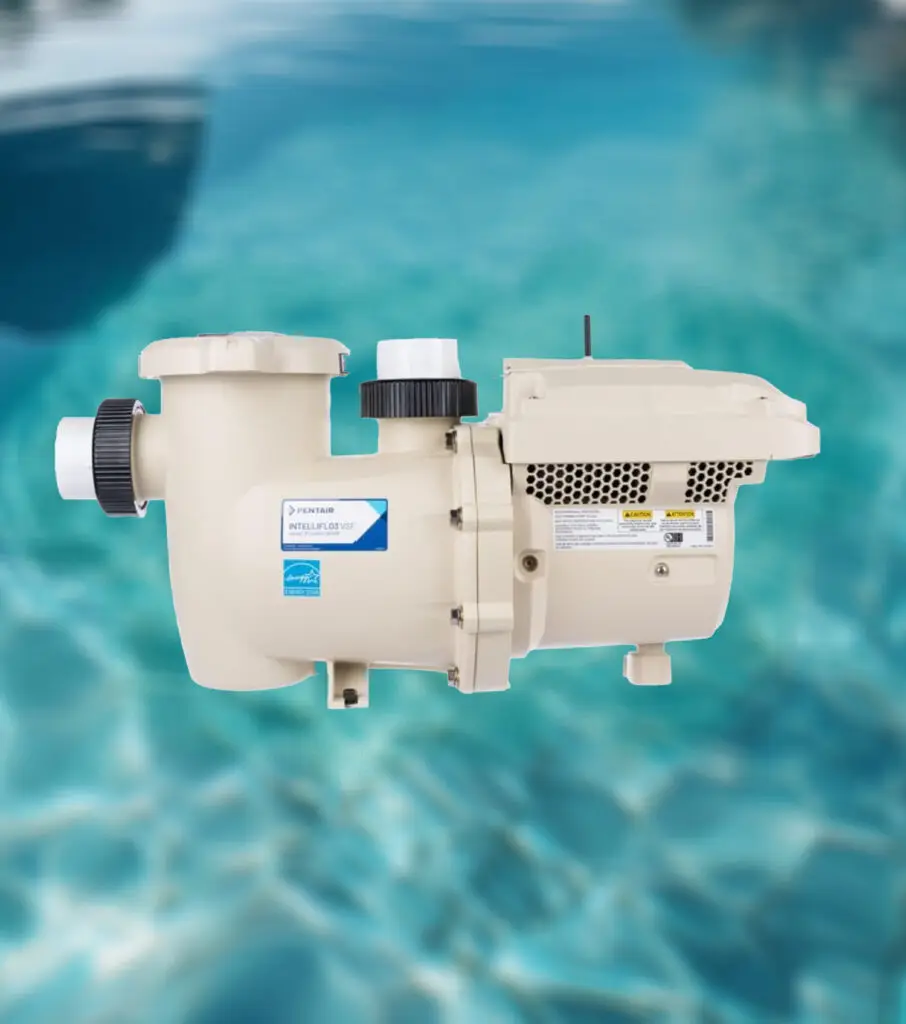
Hayward, Pentair, Jandy
Motor, seal, impeller, drive
What’s included
What a Pool Pump Repair Covers in Phoenix
The pump is the sound of the backyard, so people notice when it changes. It hums and will not start. It screams like a bearing on its last day. The basket never fills and the pump runs dry. There is a puddle under the motor every morning, and the breaker trips on the hottest afternoon.
A pump problem becomes a pool problem in days. No circulation means no filtration and no chlorine reaching the far end. In a Phoenix July that is a green pool by the weekend. A pump running dry cooks its seal and then its motor. A dripping seal feeds water into the motor bearings. And a 115-degree pad with no shade is where motors go to die.
Pool pump repair from The Pool Shack starts at the pad with the pump off. The strainer basket, lid o-ring, unions and suction fittings are checked for air. Then the capacitor, windings, bearings, shaft seal and impeller are tested in turn. Failed parts are replaced with the maker’s parts, the pump is primed, and flow and amp draw are checked against the nameplate. When the motor is gone, you get two written prices. A new motor and seal, or a new variable-speed pump with the power savings beside it.
Is it time?
Signs a Phoenix Pool Pump Needs Repair
Each sound and symptom points to a different part. Catching it early is the difference between a seal and a motor.
Licensed, bonded, insured
Arizona KA-5 dual license
Why it matters
Why Pool Pumps Fail in Phoenix and How Each Failure Gets Fixed
The pump is the only moving part in the circulation system, and everything else depends on it. In Phoenix it runs long hours in summer and sits on a pad that reaches 130 degrees in the sun. The water it pulls is full of dust. Most pump failures come down to air, heat or water in the wrong place. Here is how each one shows itself and what a proper pool pump repair does about it.
Why a pool pump will not prime: air leaks on the suction side of a Phoenix pool
A pump moves water only when it is full of water. Air on the suction side breaks the prime, and the basket sits half empty while the pump churns. The air gets in through a dry or cracked lid o-ring, a loose union, a cracked pump housing or a skimmer weir stuck up. A pool level that has dropped below the skimmer mouth does it too. Summer evaporation in Phoenix drops a pool an inch or two a week, so low water is the first thing checked.
The repair is finding the leak, which is done with the pump running and a careful look at every joint. Lid o-rings are replaced and lubricated. Unions get new o-rings. Cracked housings and volutes are replaced. A pump that will not prime after all of that has a clogged impeller or a suction line problem. That is where the diagnosis moves underground.
Humming, not starting, and the capacitor: the most common pool pump repair in Phoenix
A pump that hums when it should spin has power but cannot get the motor turning. On most motors the start capacitor gives the shaft its first push, and capacitors fail from heat. A swollen, leaking or dead capacitor leaves the motor humming until its thermal overload trips. Some owners spin the shaft by hand to get it going. That works once or twice and then the motor is done.
A capacitor is a cheap part and a quick repair. The check that goes with it is the shaft itself. If it will not turn by hand, the bearings have seized or the impeller is jammed, and a new capacitor will not help. Windings are tested at the same time. A motor that has been humming against seized bearings for a few days has usually cooked them too.
Screeching bearings and motor heat: why Phoenix pool pump motors die early
The scream from a pump is its bearings. Motor bearings are sealed and cannot be greased, and in Phoenix they run in ambient heat that no other market matches. A motor rated to run at 104 degrees ambient sits on a pad at 120 with the sun on it. The bearings lose their lubricant years early. Water from a leaking shaft seal finishes them off.
Bearings can be pressed out and replaced on some motors. By the time they scream, though, the shaft and end bells are usually scored and a new motor is the same price. The repair decision is the motor’s age and the pump’s type. Shade over the equipment pad, a real roof and not a tarp, adds years to a motor. So does a pump that runs at low speed most of the day, which is the case for a variable-speed pump.
Dust is the other Phoenix motor problem. Fine soil packs the cooling vents on the motor end and the fan cannot move air through it. A motor with blocked vents runs hotter every summer until the windings give up. Blowing the vents out is part of every pump visit, and it is a two-minute job that most pool routes skip. A motor cover that keeps sun off without blocking airflow does the rest. Never wrap a motor in a tarp; it needs air more than shade.
The shaft seal: the small part that ruins the motor if it is ignored
The shaft seal is a two-piece ceramic and carbon ring where the motor shaft passes into the wet end. It keeps the water on the pump side and the motor dry. When it wears, water weeps out between the motor and the housing, and much of it runs down the shaft into the front bearing. A puddle under the pump in the morning is a shaft seal. It is the cheapest pump repair there is until it is ignored.
The seal is replaced with the wet end opened, along with the housing gasket and the diffuser o-ring. Those are disturbed anyway and are the same age. Running a pump dry, even for a few minutes while it hunts for prime, burns the seal. That is why a pump that lost prime in Phoenix heat usually needs a seal soon after. Priming problems and seal leaks arrive together.
Clogged impellers, weak flow and the debris a Phoenix pool sends to the pump
A pump that runs quietly and moves little water often has an impeller packed with debris. Mesquite leaves, palm fibers, hair, dust and small stones slip past a cracked or missing strainer basket and pack the impeller vanes. Flow drops, filter pressure drops, the cleaner stops moving and the heater will not fire. Owners chase the filter and the heater before anyone looks at the impeller.
The impeller comes out with the wet end open and gets cleared or replaced if a vane has broken. A cracked or worn impeller is common on pumps that have run a lot of dusty water. The strainer basket is replaced at the same time if it is cracked. A basket with a hole is how the impeller got clogged in the first place. A pump that loses flow every few weeks has a basket problem, not a pump problem.
Rock in the impeller is a Phoenix specialty, because decorative gravel around the pool ends up in the skimmer after every monsoon storm.
Variable-speed pump repair: drives, error codes and programming
Variable-speed pumps put a computer on top of the motor. The drive can fail from heat and from monsoon lightning, and it shows its problems as error codes. Overheat codes, low voltage codes, communication faults with an automation system and a drive that will not respond to buttons are all common. Some drives are replaceable on their own. Others are a sealed unit with the motor, and the repair is a new motor and drive together.
Many variable-speed complaints are programming, not failure. A pump set to one low speed all day never completes a turnover, so the water clouds. A pump set to one high speed all day costs as much as the single-speed it replaced. Heater, cleaner and spa modes each need their own speed and schedule. Setting that up is part of the repair visit on every variable-speed pump. The wrong schedule is the most common reason a new pump disappoints.
Repair or replace: when a Phoenix pool pump is worth fixing and when it is not
Capacitors, seals, o-rings, impellers and baskets are always worth repairing. A motor is worth replacing on a pump whose wet end is sound and whose model is still made. A whole pump is the answer when the housing is cracked or when the motor and drive fail together on an older variable-speed unit. It is also the answer when a single-speed motor dies.
The single-speed case has a reason behind it. Federal efficiency rules since 2021 mean most replacement pumps sold for pools are variable-speed. Running slow most of the day, a variable-speed pump uses a fraction of the power of the single-speed it replaces. In Phoenix, where the pump runs long hours, that difference pays for the pump. When a single-speed motor fails, a new motor is quoted, but so is a pool pump installation with the savings beside it.
Pool pump repair cost in Phoenix and what moves the number
Phoenix market pricing in 2026 runs about $150 to $250 for a start capacitor and $150 to $300 for a shaft seal with gaskets. An impeller and basket run $200 to $400, and a replacement motor installed runs $400 to $800. Variable-speed drive replacements run $500 to $900. A new variable-speed pump installed runs $1,200 to $2,500. Those are market ranges, not our quote.
The number moves with the brand, the horsepower, and how many parts failed together. A pump that ran dry for a week usually needs a seal and a motor, not one or the other. It also moves with what the failure has already cost. A pump that has been down for a week in July has a green pool behind it, which is its own bill. Fast diagnosis is worth more than a cheap part.
Warranties change the math too. Motors and pumps under a maker’s warranty are repaired through the warranty when the failure qualifies, and the paperwork is handled as part of the job.
Pool pump repair from North Phoenix to Scottsdale and Cave Creek by a licensed crew
The Pool Shack repairs single-speed and variable-speed pumps across North Phoenix, Scottsdale, Paradise Valley, Cave Creek, New River and Glendale. Every call runs from our North Phoenix base. The work runs under an Arizona KA-5 dual license, which covers service and construction. Motor replacement and rewiring are electrical work, and a license is what stands behind it.
Hayward, Pentair and Jandy pumps are most of the calls, and the common capacitors, seals and o-rings are stocked. Pools on our weekly pool service route get the pump listened to and the basket checked every visit. A seal weep gets caught before it is a motor. When a pump repair uncovers a loaded filter, filter cleaning is handled on the same trip. Family-owned since 2015, licensed, bonded and insured.
Getting started
How a Pool Pump Repair Runs
1
Power off, symptom traced to the part
Air, capacitor, bearings, seal, impeller or drive, checked in order at the pad before anything is ordered.
2
Failed part replaced with the maker’s part
Seals, gaskets and o-rings replaced together while the wet end is open, motors matched to the nameplate.
3
Primed, programmed and verified
Pump primed, amps and flow checked, variable-speed schedules set for filter, heater, cleaner and spa.
Get a quote
Get a Quote for Pool Pump Repair
Tell us the pump brand and model, what it sounds like or does when it starts, and if there is water under it. A photo of the label helps. We will price the repair in writing.
Related services
Services That Go With Pool Pump Repair
Pool Pump Installation
A new variable-speed pump when the motor is gone or the housing is cracked, sized and programmed for the pool.
Learn More
Pool Filter Cleaning
A loaded filter makes a pump work harder and hotter. Cleaning it protects the repair you just paid for.
Learn More
Pool Automation
Schedules, speeds and heater modes set from one controller, so the pump runs the way it was meant to.
Learn More
Common questions
Pool Pump Repair Questions From Phoenix Pool Owners
Why is my pool pump humming but not starting?
Usually a failed start capacitor. If the shaft will not turn by hand, the bearings have seized or the impeller is jammed, and a capacitor will not fix it. Humming against seized bearings for days also damages the windings.
How much does pool pump repair cost in Phoenix?
Market rates in 2026: about $150 to $250 for a capacitor, $150 to $300 for a seal, $200 to $400 for an impeller and basket, and $400 to $800 for a motor. A new variable-speed pump is $1,200 to $2,500.
Should I repair my pool pump or replace it?
Repair capacitors, seals, impellers and baskets. Replace the motor if the wet end is sound. Replace the whole pump if the housing is cracked, the motor and drive fail together, or a single-speed motor dies.
Why does my pool pump keep losing prime?
Air is getting in on the suction side. Check the water level at the skimmer first, then the lid o-ring, unions and fittings. Losing prime in Phoenix heat burns the shaft seal, so a seal leak often follows.
Do you repair pool pumps in Scottsdale, Cave Creek and New River?
Yes. Pump repairs run from our North Phoenix base across North Phoenix, Scottsdale, Paradise Valley, Cave Creek, New River and Glendale. Call (480) 798-2888 with the brand and what the pump is doing.
Why is water leaking from my pool pump?
Between the motor and the wet end, it is the shaft seal. At the lid, the lid o-ring. At a union, its o-ring. Seals are cheap until the water reaches the motor bearings, so fix them early.
Why is my pool pump so loud?
Screeching or grinding is worn motor bearings, often from heat or a leaking seal. Rattling is debris in the impeller or cavitation from a suction restriction. A loud pump is telling you what it needs before it fails.
Why does my pool pump trip the breaker or shut off when it is hot?
The motor’s thermal overload is tripping. Causes are a failing capacitor, tired bearings, low voltage, a clogged impeller, or simply a 120-degree pad in full sun. Shade over the equipment adds years to a motor.
Can a single-speed pool pump be repaired in Arizona?
Yes, with seals, capacitors and impellers. When the motor fails, most replacement pumps sold today are variable-speed under federal efficiency rules. The power savings in Phoenix usually pay for the new pump.
How long should a pool pump last in Phoenix?
Eight to twelve years for the pump, with a motor or seal along the way. Heat, running dry and a leaking seal shorten it. A shaded pad and a variable-speed pump running slow most of the day stretch it.
Where We Work
Proudly Serving the Phoenix Area
- Phoenix
- Scottsdale
- Tempe
- Mesa
- Chandler
- Gilbert
- Glendale
- Peoria
Ready When You Are
Book a Pool Pump Repair in North Phoenix
Priming, capacitor, seal, motor and drive problems fixed with the maker’s parts by a KA-5 licensed, family-owned crew, from North Phoenix across the Valley.